
Is Windsor STP or ECN? CFDs on FX, Stocks & More
Market Maker brokers, also known as Dealing Desk brokers, take the opposite approach. They create their own internal market where clients trade directly against the broker. In 2025, the differences between these models are clearer than ever as regulation, technology, and transparency standards continue to evolve. Brokers can no longer hide behind vague terms or blended structures—traders now expect proof of how their orders are executed.
- CFD brokers enable traders to buy or sell CFDs based on the price movements of the underlying assets such as forex, stocks, commodities, etc.
- Every forex broker operates under one of three main execution models—ECN, STP, or Market Maker.
- Liquidity determines how easily trades can be executed without affecting price.
- Rather than choosing based solely on spreads or marketing slogans, traders should evaluate brokers based on how orders are executed, how liquidity is sourced, and how transparent reporting is.
- Brokers can no longer hide behind vague terms or blended structures—traders now expect proof of how their orders are executed.
- With the advent of sophisticated software, data analytics, and other technological tools, companies can now identify, assess, and mitigate risks more effectively than ever before.
What are the benefits of the ECN/STP model?
In the modern hybrid landscape, a reputable Market Maker can offer the stability a swing trader needs, while a robust ECN is the only home for a high-frequency scalper. Brokers hate ‘toxic flow’—strategies like latency arbitrage that exploit the broker’s pricing lag. If your strategy looks toxic, you’ll likely find yourself pushed into an execution environment with higher slippage or frequent requotes. Understanding this helps you realize why managing drawdowns is as much about protecting your reputation with your broker as it is about protecting your capital. If you are a consistent winner or trade massive volume, they move you to the A-Book, routing your trades to external providers to protect themselves from your profit.
Skyriss employs an aggregated liquidity feed that delivers raw pricing with minimal markup. This ensures institutional-level execution quality with transparent costs , ideal for both experienced and developing traders. They offer the transparency of A-Book execution but with smoother cost structures suitable for a broader range of traders. Technological advancements have revolutionized the management of regulatory risks, offering innovative solutions to enhance regulatory compliance and risk mitigation. Only those with high profitability would be sent to the market for hedging, which will be processed by banks and other counterparties.
Trading Begins Here.
STP, or Straight Through Processing, is a method used by Forex brokers to directly transmit client orders to liquidity providers without any dealing desk intervention. This process ensures that trades are executed seamlessly and efficiently in the Forex market. From a trader’s perspective, ECN and STP models provide more realistic market conditions. Orders are executed at live market prices, and spreads fluctuate naturally with liquidity. For those who prefer predictable pricing, Market Makers may seem appealing, but the trade-off often lies in limited transparency.
Trading Style
Understanding these connections is crucial for traders when selecting a broker. In this case, the system selects another offer closest in parameters; the actual price may differ from the initial one and become the weighted average price in case of large orders. Instead, prices are aggregated from multiple liquidity providers, giving traders access to tight spreads and deep market liquidity.
Key Features and Advantages of STP in ECN Trading[Original Blog]
STP is often best for beginners due to its straightforward setup and transparent pricing. It allows new traders to execute trades without worrying about complex order routing and technology requirements. Below are the main differences between these two popular systems of making transactions in the international foreign exchange market. Looking ahead, the boundaries between ECN and STP will continue to blur as technology advances.
Soft-FX’s turnkey solution for establishing a Forex broker includes the aforementioned features of advanced liquidity aggregation and risks hedging. Market Makers often offer fixed spreads (e.g., 1.5 pips on EUR/USD regardless of news). However, ECNs offer variable raw spreads that can go as low as 0.0 pips during high liquidity, but they add a commission (usually $3 to $7 per lot).

Forex Brokers: Dealing Desk, STP or ECN?
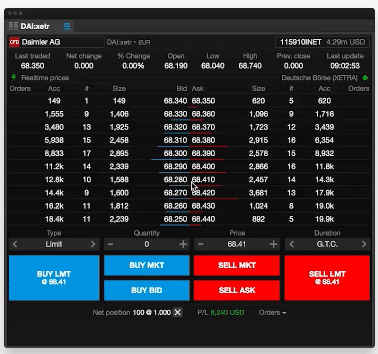
Additionally, the high transparency and anonymity provided by ECN are beneficial for high-frequency and algorithmic trading strategies. However, DMA is also suitable for high-volume traders who need direct access to market depth and prefer the flexibility and control over order execution that DMA provides. Thus, ECN brokers usually charge a commission from each trade, while STP brokers take a commission from trades, and so does the spread. Many ECN brokers send transactions to the dealing desk of a market maker, and this technology is called Straight Through Processing or STP.
How Market Volatility Tests Each Model
An STP broker is often a better fit for beginners or lower-volume traders who want straightforward, commission-free pricing with an all-inclusive spread. For less frequent trading, slightly wider spreads and occasional slippage are usually not critical. Trading ConditionsECN is preferred for scalping, high-frequency strategies and automated trading. STP can suit general retail traders who want simpler fee structures and don’t need ultra-tight spreads. Understanding the difference between ECN and STP brokers is key to choosing the right trading account. Both offer fast execution, but their pricing, liquidity access, and trading conditions vary widely.
What Is A-Book vs B-Book? A Simple Guide for Forex Brokers
However, being that market maker brokers control the prices at which orders are filled, fixed spreads are also common. An STP (Straight Through Processing) Forex broker is a type of intermediary that directly passes traders’ orders to liquidity providers. They receive prices from banks and other liquidity providers and allow traders to execute their trades based on these prices.
Comparison ECN Brokers vs STP Brokers
This is why you might see a ‘Requote’ or get filled at a worse price even on a ‘direct’ connection. You can often see the Depth of Market, showing you exactly how many lots are available at different price levels. This is vital for high-volume traders everestex forex broker who need to know if their 50-lot order will move the price against them.
Global Prime
This technological advancement has significantly increased trading volumes and liquidity in the markets, while also raising concerns about market stability and fairness. HFT relies heavily on STP and ECN trading infrastructure to execute trades swiftly and efficiently, showcasing the critical role of technology in these trading methodologies. All in all, the ECN model is arguably the most transparent in forex trading, with brokers making money only through commissions, not spreads, and not acting as counterparties to clients.